Showing posts with label Session Coverage. Show all posts

Wednesday, 30 January 2013

Session 8: Filipino Films

Written by Lestari Hairul
Photographed by Melissa Chia and Sarah Chong

    For our final scheduled session, we visited the Cultural Centre of the Philippines (CCP) for a tour, talk and short screening of Filipino independent cinema. Our host for the day was Mr Edward Cabagnot, a writer and 27 year veteran of the arts scene who will be retiring from his position as the head of the CCP film department soon.

Mr Edward Cabagnot

     We were given a tour of the building that was built during the Marcos’ reign by decree of Imelda Marcos as the premier arts and cultural institution for the elites of Manila. The CCP is a sprawling building of modernist architecture, decorated by several paintings and sculptures produced by Filipino maestros; art installations; art exhibitions and small cultural museums.

Tuesday, 29 January 2013

Session 7.1: Good Morning Manila

Written by Helen Sneha
Pictures by Jonathan Lim, Sarah Chong and Melissa Chia


The architecture of the church is gorgeous

     We headed out into Manila on our first day feeling fresh and upbeat after a short, comfortable flight, a breakfast at Jollibee's, and a few hours of shut-eye. As we took a drive around the city, it gave us great pleasure to point out and compare jeepneys, various words, and buildings with the ones we had grown familiar with in Iloilo. We stopped by The Church of the Black Nazarene in Quiapo, and spent some time inside marveling at the architecture and the grandeur. I, for one, had not been aware of what the Black Nazarene was, and learned about it for the first time in the church on that day. It is a statue of Jesus Christ that had apparently turned dark when it survived a fire on its way to the Philippines, and is believed by many to be miraculous. We also spent some time looking upward at the panels on the ceiling depicting the birth of Christ on one hand and his crucifixion on the other.

Session 7.2: The Big Binondo Food Wok

Written by Gwyneth Liew
Pictures by Sarah Chong, Gwyneth Liew and vivafilipans.tumblr.com

<< 1. First Morning in Manila                                    3. Same same but different >>

      The Big Binondo Food Wok is one of many tours offered by the Old Manila Walks tour company that provides tourists with an experience of the rich histories of Manila which include areas like Intramuros, Binondo, San Miguel, Quiapo, the Chinese Cemetery and more. Although our pathfinder, Dr. Yeoh Seng Guan had originally planned for us to go on a different tour; it was switched to the Binondo Food Wok by popular vote when the original tour became unavailable. Our tour guide for the day was Mr. Ivan, a local who is of Chinese and Filipino descent. He is also a friend of Mr. Eugene Jamerlan, our previous tour guide who brought us to the magnificent and historic mansions in Mandurriao, Iloilo City.

Session 7.3: Same same but different

Same Same But Different: Close cultural proximities of the Chinese in Malaysia and the Philippines 

Written by Low Jia Wei 
Photographs by Jonathan Lim, Sarah Chong and Melissa Chia

<<
 2. The Big Binondo Food Wok                             1. First Morning in Manila >>

      It never fails to amaze me how the Chinese diaspora in all parts of the world manage to maintain their unique cultural heritage amidst the assimilation and acculturation processes that usually consume minority cultures into mainstream ones. However, the Chinese culture proves to be a resilient one, bending and adopting other cultural practices into its fold, rather than breaking and becoming absorbed. Of course, I realize that China is a vast empire and as such its culture varies greatly from region to region, but for the purposes of this article, I refer to culture that originates from Fujian in China, a region from which the Chinese communities of Manila and my hometown, Penang, hail from.

A familiar sight

Friday, 25 January 2013

Session 6.1: Nanark Darbur - The Sikh Temple of Iloilo

Written by Kushmin Perera
Photographs by Melissa Chia


     Located in the corner of Mandurriao,Western Visayas, the Sikh temple of Iloilo -'Nanark Darbur'- is one of the very few non-Catholic/ Christian establishments in the province, and has stood for 50 years. With an incense-infused scent upon entrance, you are introduced to a completely new side of Iloilo- away from the countless churches and Dinagyang festival fever to a little touch of India. Initially, we were greeted by the devotees who were already present for their daily prayers, who instructed us to wear headscarves before entering. We were then directed towards the prayer chamber, where we all sat respectfully before the Guru Granth Sahib, the Sikh holy book.

Session 6.2: A Taste of Home, Our Langar Experience in Iloilo

Written by Anis Nadia Jilid
Photographs by Melissa Chia


Granthi Amrik Singh offering us Karah Parshad


     After the conclusion of the Q&A session, all of us were offered a sweet called karah parshad by Granthi. In Sikhism, this sweet is made with equal portions of whole-wheat flour, butter and sugar. It is offered to all visitors to the Darbar Sahib (main hall of the Gurdwara) and should not be refused when given. This is because the food itself is regarded as having been blessed, and as a sign of humility and respect, visitors accept the karah parshad while sitting and their hands raised and cupped. The offering and acceptance of this food is an important part of hospitality customs in Sikhism.

Thursday, 24 January 2013

Session 5.1: The Urban Poor of Iloilo : North Baluarte & the Sooc Project 5 Site

Written by Sheril A. Bustaman 
Photographs by Joyce Ng and Jonathan Lim


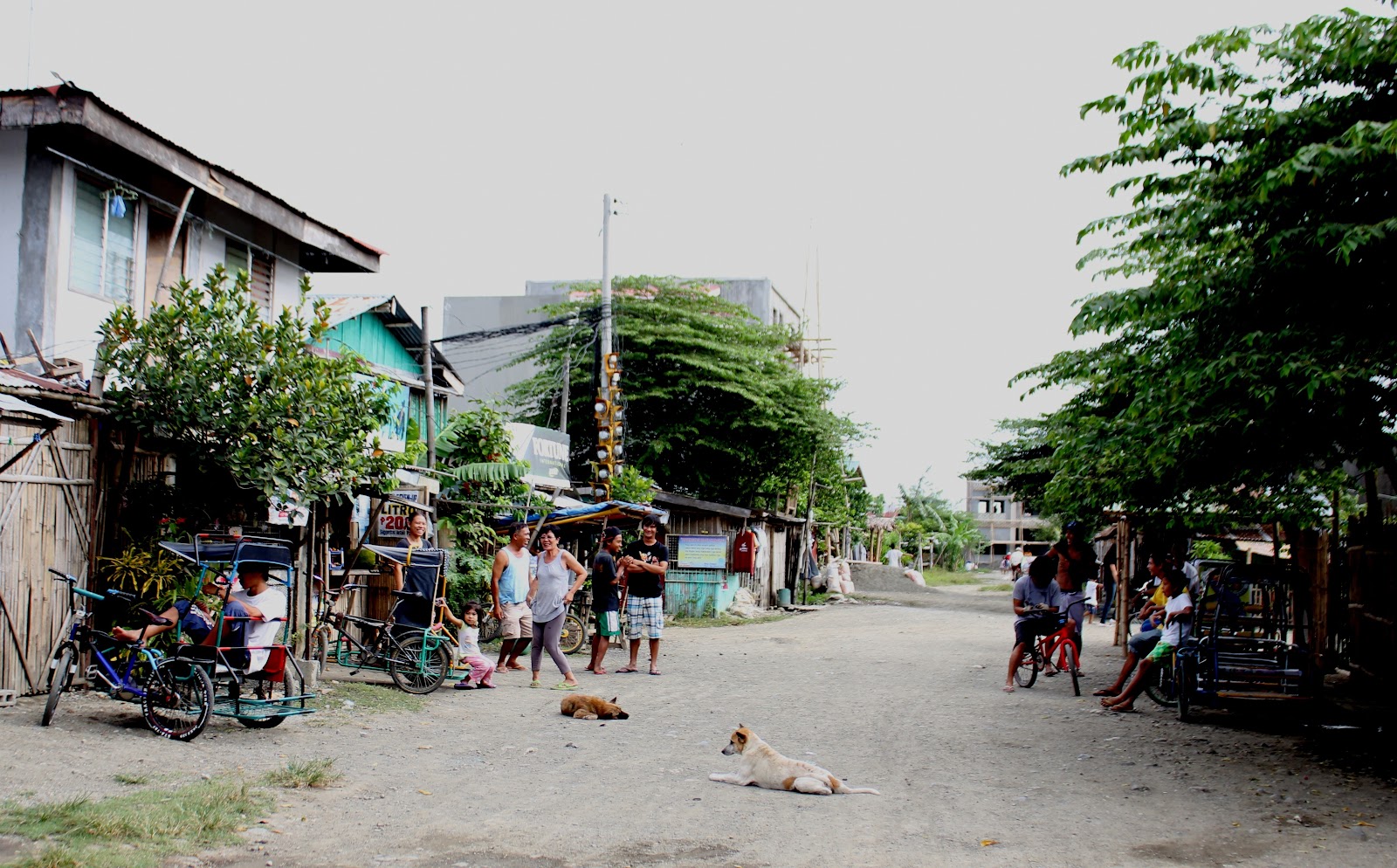
     Iloilo is a vibrant thriving city that is developing at its own pace. Hidden within the developing city however are squatter areas and project sites populated by the urban poor. On the sixth day of our journey, the travellers split into three different groups to visit the places where the urban poor lived and worked. This article is about two such areas: North Baluarte and the Sooc Project Site.

Session 5.2: The Cast outs of Iloilo City

Written by Traceline Choo
Photographs by Melissa Chia

     Jaro is one of the areas where relocation sites in Iloilo city are located. Relocation sites are places where citizens are placed when their houses are demolished for urban development purposes by the government. But, as organizations like Kadamay would agree, these citizens are not given attention by the government and most of them are facing financial problems and lack access to clean water. 

The San Isidro Jaro relocation

Session 5.3: Down in the Dumps

Written by Sarah Chong

Photographs by Sarah Chong


     As Iloilo city continues to develop into a  beautiful city, urban poor communities are caught in the middle of things-often, they are displaced and relocated by the urban planning efforts of the local authorities. With the assistance of Kadamay, our group of 10 were able to take a walk through the urban poor area of the dumpsite and slums in Calajunan, Mandurriao and Lapuz Norte, Lapuz respectively.

Tuesday, 22 January 2013

Session 4: The Indigenous People of Jordan, Guimaras

Written and photographed by Melissa Chia


Guimaras shoreline

     Guimaras is an island located on the Western Visayas of the Philippines, framed by beautiful beaches with three-toned seawater. The Ati community of Guimaras Island was very welcoming, with their chieftain, Ms. Josephine Tahan giving us an introduction on the life and times of the Ati.

Monday, 21 January 2013

Session 2.1: Visayan Culture and Practices

Written by: Joyce Ng
Photographs by: Jonathan Lim, Orthofill.com, 123rf.com

Speech given by Professor Melanie 
(Picture taken by Jonathan) 
  
     On the third day of our study trip, Professor Melanie Padilla, a lecturer in history and culture from the University of Philippines Visayas spoke about the nation’s history and culture to the travelers. Professor Padilla broke her session into two parts, one focusing mainly on the history of Iloilo, and the other focusing on the culture of Iloilo. This article will feature Iloilo’s culture.

Session 2.2: A brief history of Iloilo

Written by Emily Choong 
Photographs by Jonathan Lim

Professor Melanie 

     The 'In Search of Iloilo' team along with their respective student guides attended a lecture regarding the history and culture of Iloilo presented by Professor Melanie J. Padilla, the Director for the Centre for Visayan Studies at the University of Philippines, Visayas.

Session 3: Catholicism and Social Action

Written by Esther Ho
Photographs by Melissa Chia and Sarah Chong

     We spent the afternoon with Monsignor Oso discussing the role his parish plays in impacting the Filipino laypeople.

Monsignor Meliton Oso

     In Iloilo, the Archdiocese of Jaro is pioneering numerous efforts to better the lives of 27 million Filipinos living in poverty. Monsignor Meliton Oso, a priest for 27 years and Associate Director of the Archdiocese for 20 years, presented the nation’s problems and his five-fold project to address them. Monsignor Oso began with an overview of Christian Monsod’s critical presentation entitled “The National Situationer”. Monsod’s presentation was presented at the Catholic Bishop’s Conference of the Philippines (CBCP-NASSA) in 2011.

Saturday, 19 January 2013

Session 1: Philanthropy in Iloilo

Written & Photographed by Jonathan Lim

The quest of discovering Iloilo City begins with the conclusion of its first session, entitled Philanthropy in Iloilo. 

Professor Bruce Hall
      In addressing this topic, Professor Bruce Hall, lecturer of American History at the University of the Philippines Visayas, dove into the history of the Philippines and how pre-Hispanic structures were instrumental in shaping its society of today. Convenience stores that are attached to village homes, more commonly known as sari-sari in Tagalog, are a long-standing example of a structure that was a part of the community back then and one that still plays a big role now. Apart from being an important economic location that provides basic needs for the people, sari-sari stores also serve as a place of informal exchanges – benches set outside these stores allow the people to socialize and forge friendships. Sari-sari stores remain an important backbone of the grassroots economy and the Philippines culture. Professor Hall then explained the bayanihan tradition, which described any communal act of helping families within the community, such as move their homes by literally carrying houses, building barns communally and how that helped to foster solidarity within communities.